





learn more
technical info
profile
map
technical info
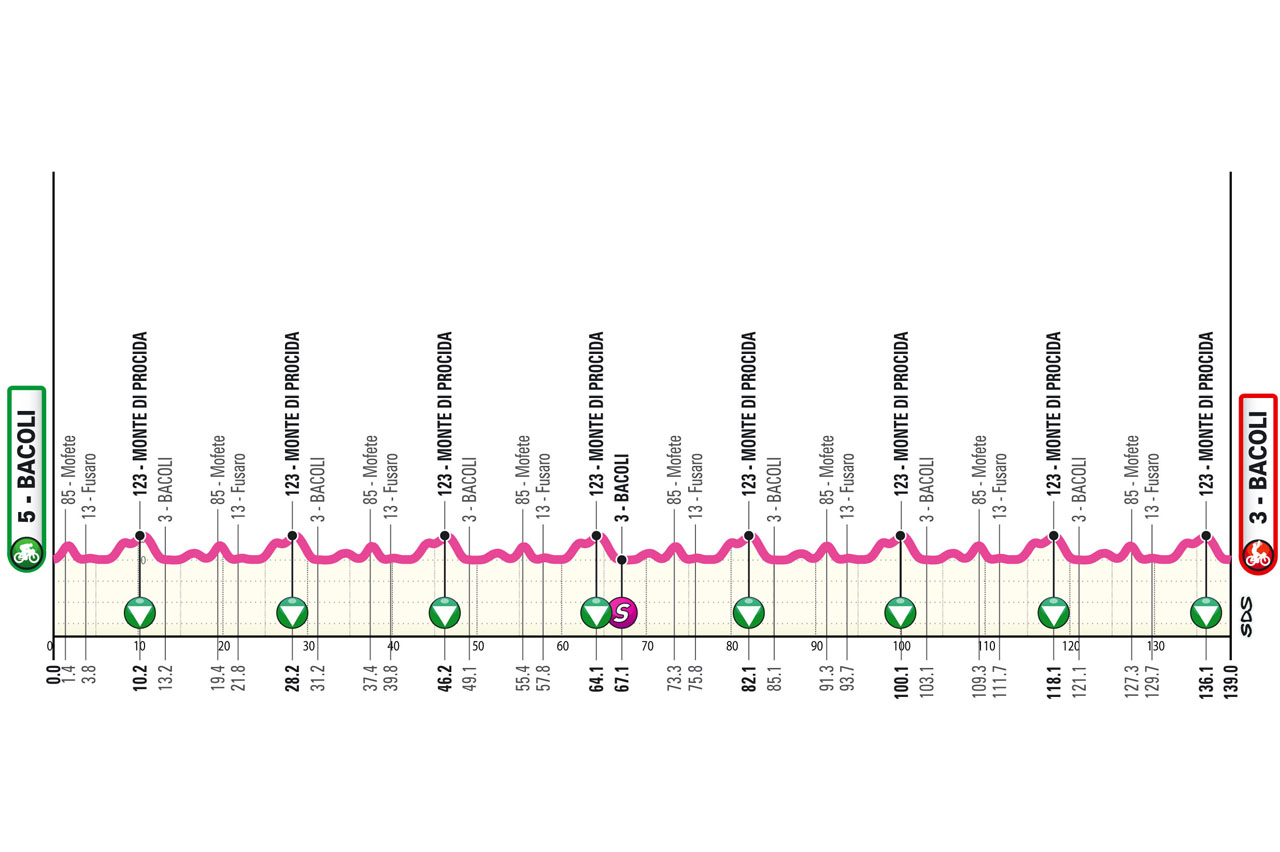
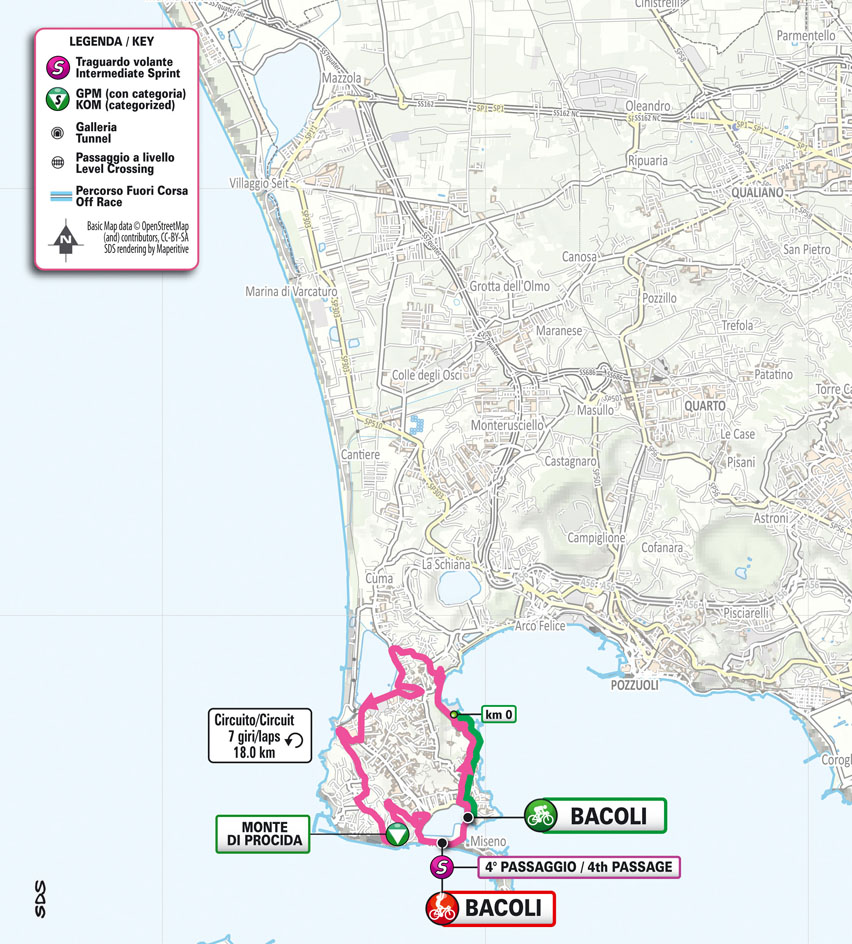
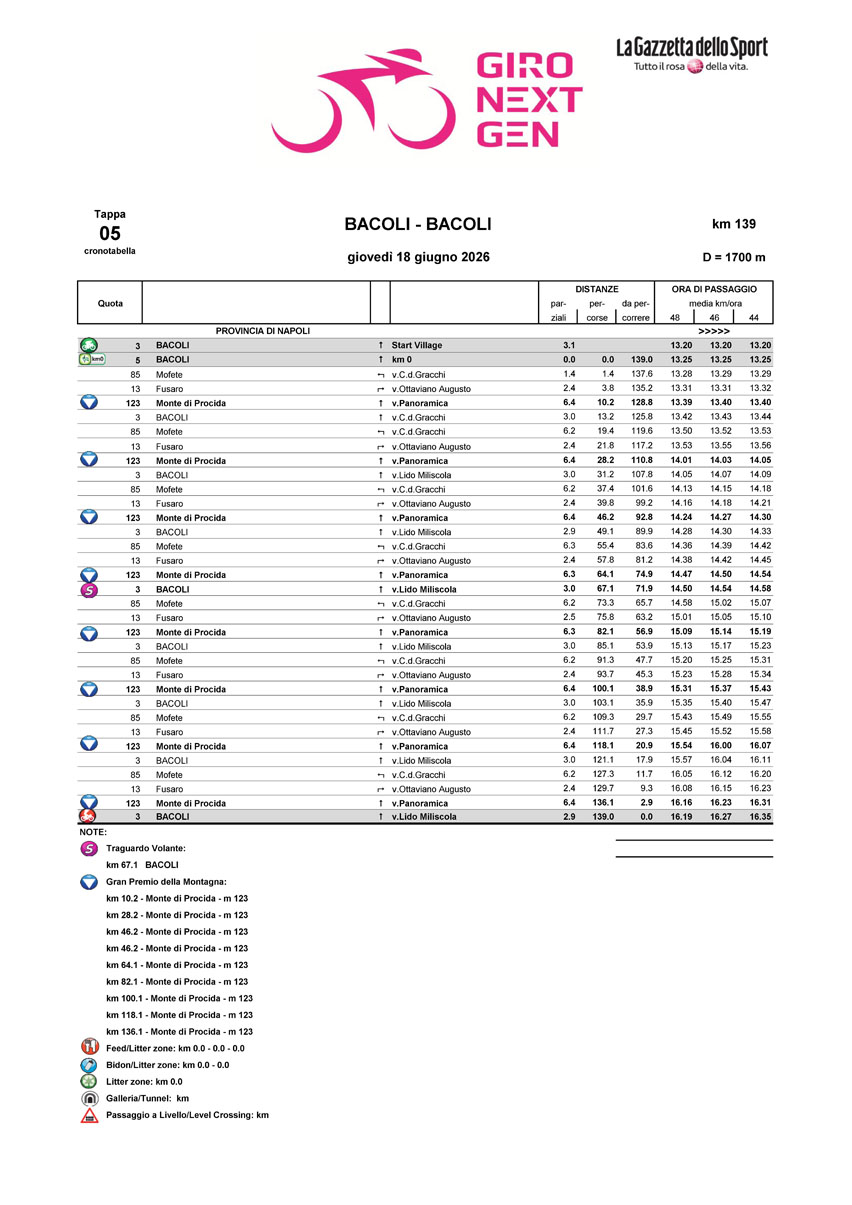
A stage entirely set within the Phlegraean Fields, featuring a circuit packed with constant ups and downs. The repeated ascents to Monte di Procida, the steep ramp of Mofete (15%), and the numerous changes in elevation make for a particularly nervous and demanding race.
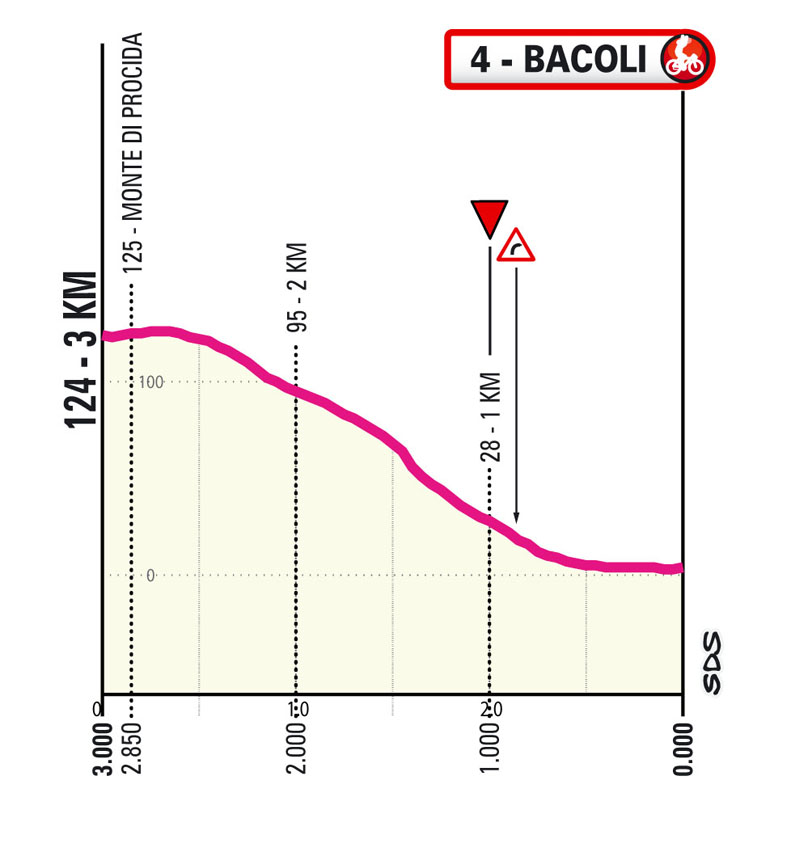
FINAL KILOMETERS
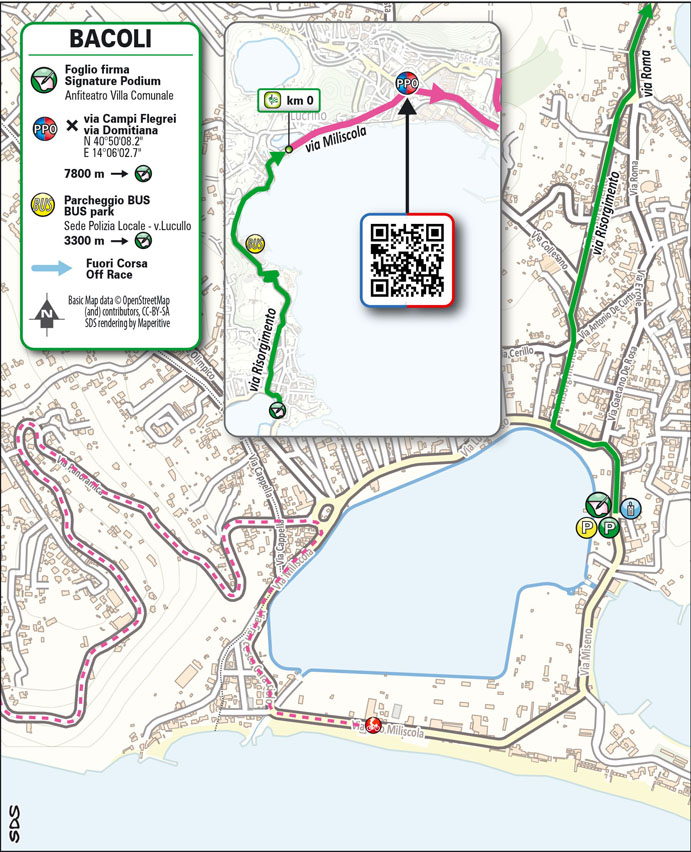
The closing kilometres begin with a descent from Monte di Procida, followed by a flat run on wide and predominantly straight roads. The stage concludes with a 300-metre finishing straight.
start / finish
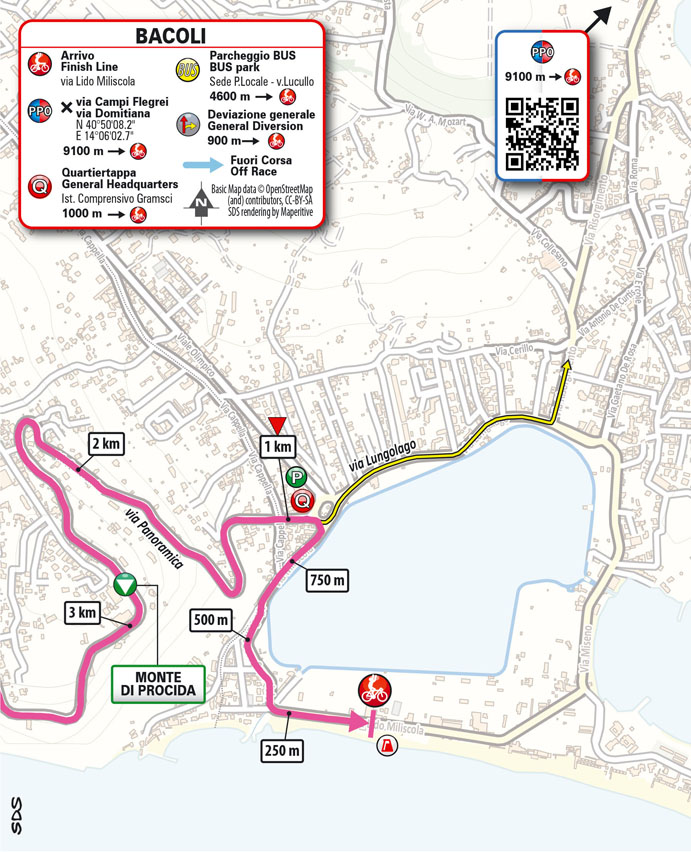
final kilometres
itinerary timetable
tourist info
Host city:
Bacoli
Overview
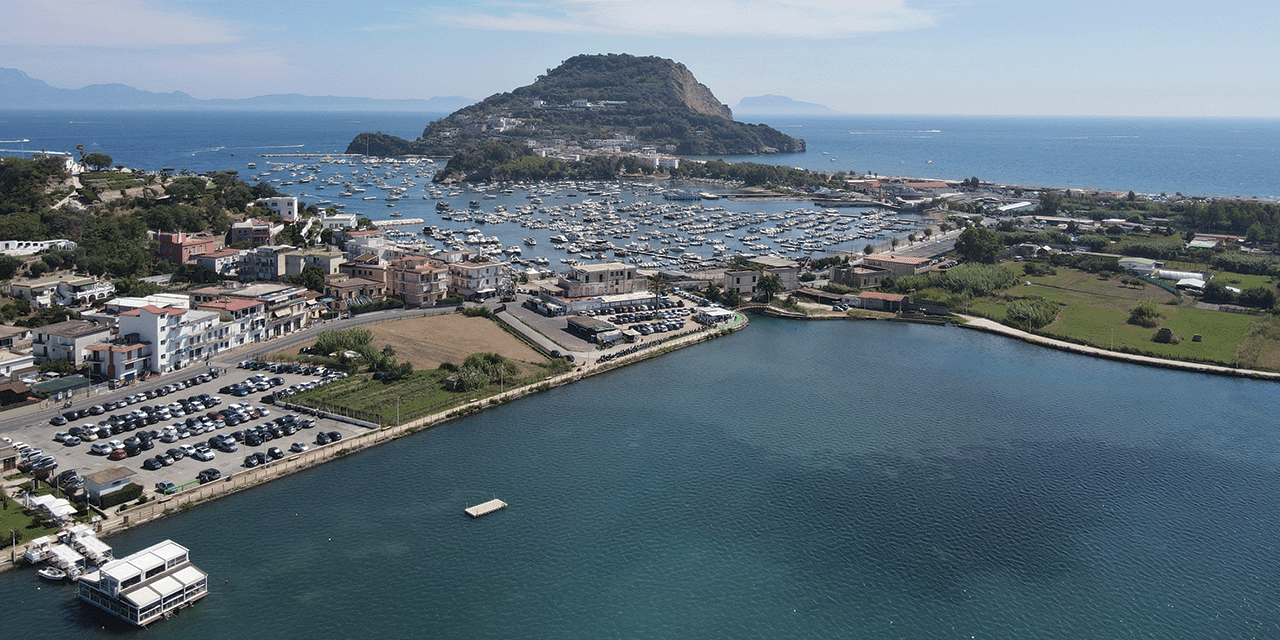
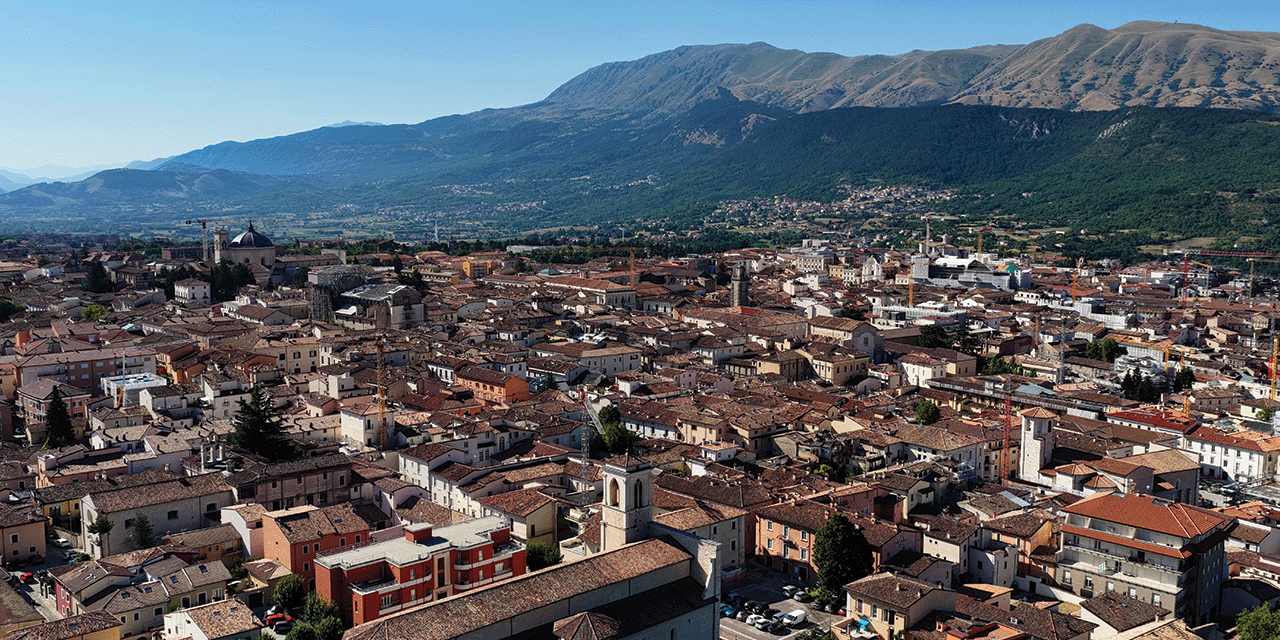
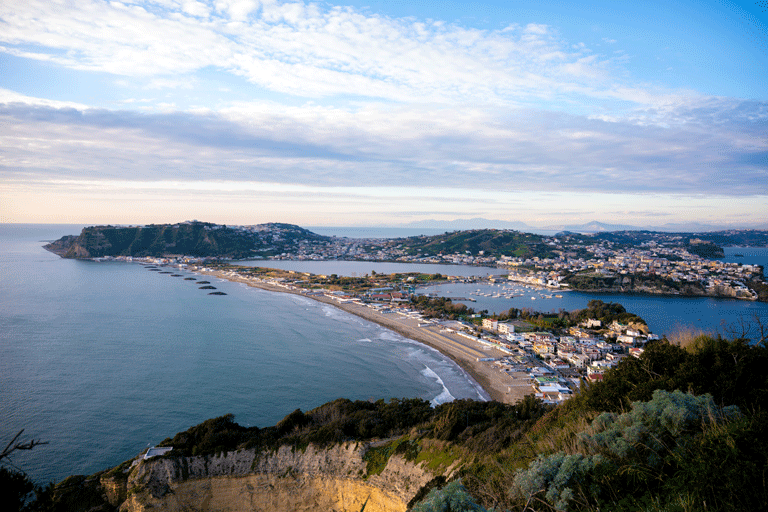
Bacoli is a town of 25,000 inhabitants in the Phlegraean Fields, overlooking the Gulf of Pozzuoli, a few kilometres from Naples. A volcanic area characterised by the phenomenon of bradyseism, it is a peninsula surrounded by the sea, whose hamlets include Cuma, one of the first Greek colonies on the Italian Mediterranean coast. Rich in archaeological sites, including the Submerged Park of Baia, it encompasses three ancient Roman cities: Cuma, Baia and Misenum, home to the Classis Praetoria Misenensis, the imperial fleet of Pliny the Elder. An ideal destination combining history, nature, beaches, food and wine, myths and legends.
Food
Capo Miseno mussels: Mussels farmed in the waters off Capo Miseno are one of Bacoli’s signature products. Fleshy and flavourful, they are enjoyed raw, au gratin or as the star ingredient in traditional pasta dishes.
Spaghetti with clams: A classic of Phlegraean cuisine, this dish combines pasta with fresh clams from the Gulf in a simple preparation that brings out the authentic aromas and flavours of the sea around Bacoli.
Fish soup: Rich and fragrant, it is prepared with various varieties of local fish and seafood. It is one of the dishes that best reflects Bacoli’s seafaring tradition.
The cicerchia: The cicerchia is an ancient legume from the Phlegraean peasant tradition. Rich in protein and flavour, it is used in soups and broths, representing a simple and authentic gastronomic heritage.
Peppered mussels: A simple yet flavourful dish, it features fresh mussels seasoned with plenty of black pepper. It is one of the most popular dishes during the summer months.
Ciambotta: Ciambotta is a traditional peasant dish prepared with seasonal vegetables, cooked slowly and seasoned with oil and herbs. Simple and wholesome, it captures the authentic flavours of the region.
Casatiello: Sweet casatiello is a traditional Easter cake from Campania, made with a soft, fragrant dough. Covered in a white icing decorated with coloured sprinkles, it is a symbol of celebration and conviviality.
Migliaccio: Migliaccio is a traditional dessert from Campania, made with semolina, ricotta, eggs and citrus flavourings. Soft and fragrant, it is particularly popular during the Carnival season.
The mandarin: The mandarin from the Campi Flegrei is a prized citrus fruit grown on the volcanic soils of the area. Fragrant and with an intense flavour, it is one of the region’s finest agricultural products.
Drinks
Bacoli’s winemaking tradition is linked to the wines of the Campi Flegrei, produced on volcanic soil that gives the grapes their unique characteristics. Among the finest wines are the Falanghina dei Campi Flegrei, a fresh, mineral-rich white wine, and the Piedirosso, a red wine with a balanced and fragrant flavour. Alongside the wines, artisanal liqueurs made from local citrus fruits are also highly regarded, such as the Campi Flegrei mandarin, a symbol of the region’s agricultural heritage.
Points of Interest
Baia Castle – Archaeological Museum of the Phlegraean Fields
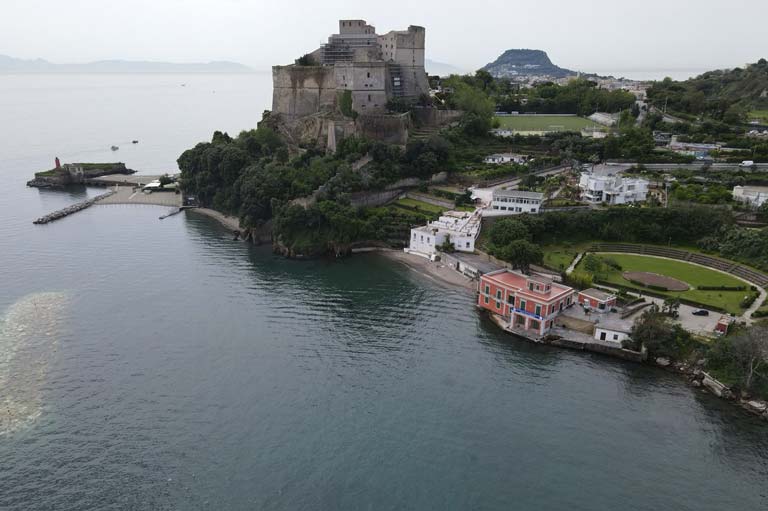
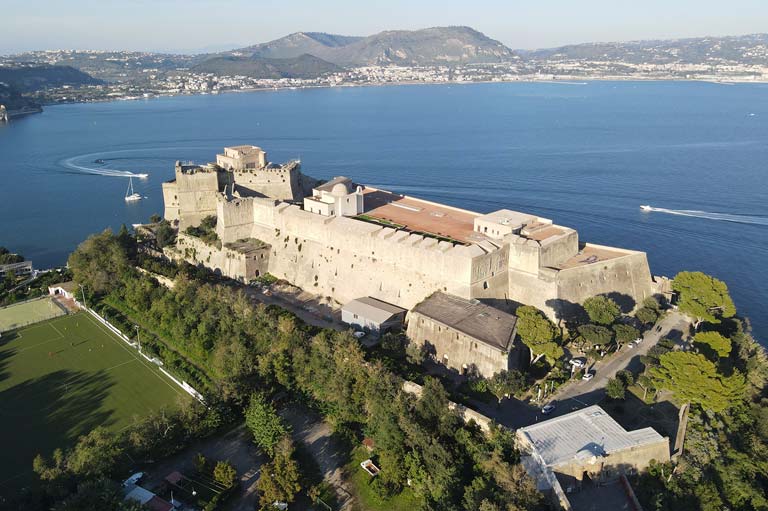
Baia Castle, built by the Aragonese between 1490 and 1493 and expanded over the following centuries, is now home to the Archaeological Museum of the Phlegraean Fields. Inside, it preserves the remains of a prestigious Roman villa dating back to the 2nd century BC, possibly once owned by Julius Caesar. The museum route unfolds through courtyards, panoramic terraces, and ancient structures, offering breathtaking views of the Gulf of Naples and the remarkable volcanic landscape of the Phlegraean Fields.
The Underwater Archaeological Park of Baia
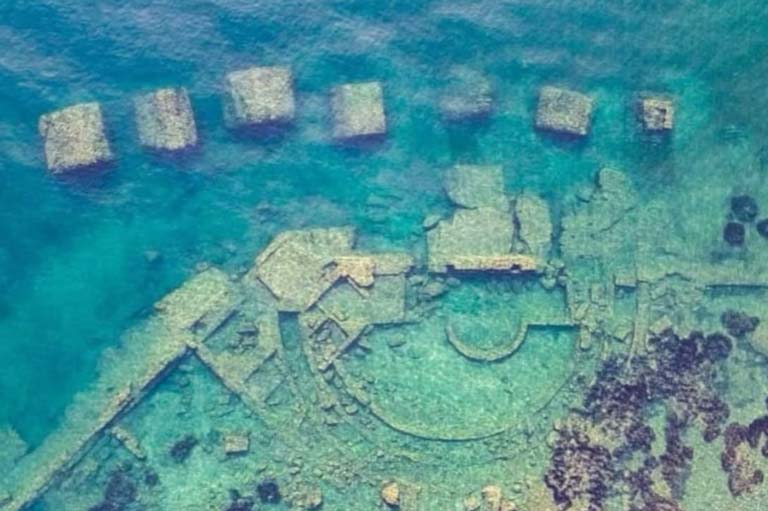
The Underwater Archaeological Park of Baia is a protected marine area that preserves extraordinary submerged remains of the ancient Roman city. Featuring mosaics, roads, columns, and villas—including the famous Villa del Protiro, which can also be explored while snorkeling—it offers a unique experience where history and nature meet. Many artifacts recovered from the seabed, such as statues and vases, are now displayed at the Archaeological Museum of Baia Castle.
The Baths of Baia
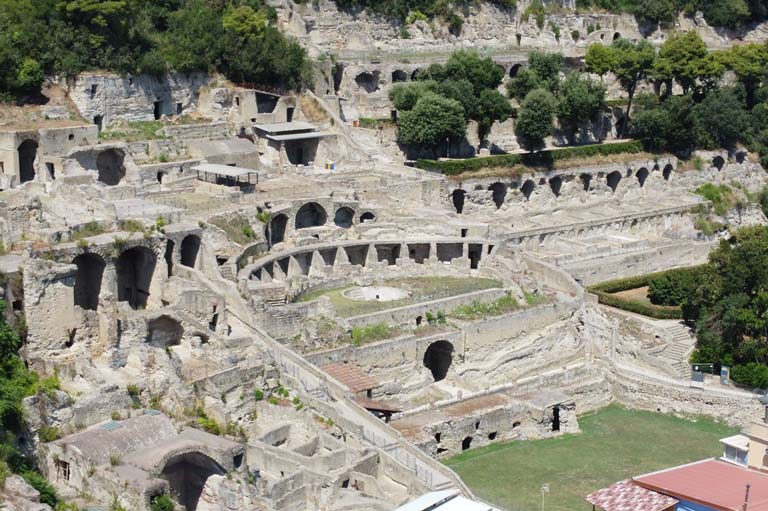
The area around the Gulf of Baia reveals an extraordinary archaeological stratification dating back to the Roman era. Over time, large thermal complexes and luxurious villas were built one upon another, taking advantage of the region’s volcanic and hydrothermal resources. The so-called “domes” of Mercury, Diana, and Venus were actually part of innovative thermal facilities and represent some of the earliest examples of concrete roofing. Originally, the site was occupied by spectacular multi-level villas overlooking the sea. Over the centuries, its function changed, becoming a thermal spa area and later falling into gradual abandonment during the Middle Ages, leaving behind a unique archaeological heritage.
Piscina Mirabilis
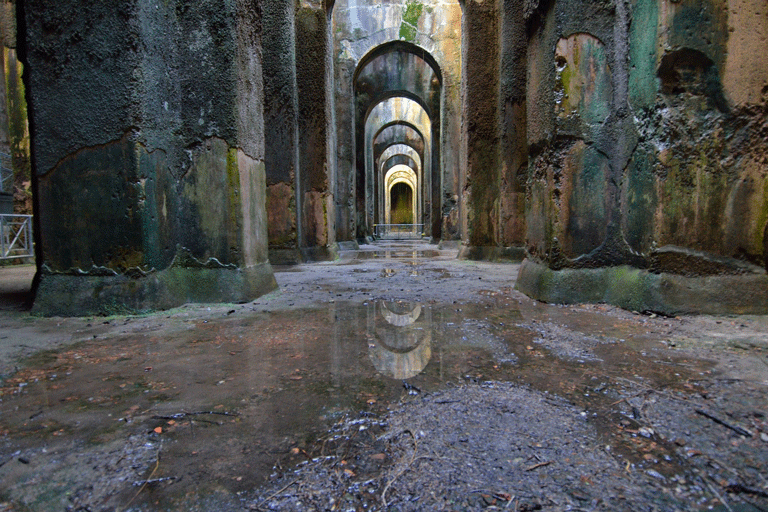
The Piscina Mirabilis in Bacoli is a monumental Roman cistern located near Miseno, the terminal point of the Augustan Aqueduct. Measuring 70 meters in length and supported by 48 pillars, it served as a water reserve for the imperial fleet. Designed like an “underground cathedral,” it could hold more than 12,000 cubic meters of water. Equipped with stepped entrances and maintenance systems, it remains one of the masterpieces of Roman hydraulic engineering and is still remarkably well preserved today.
Church of Saint Anne
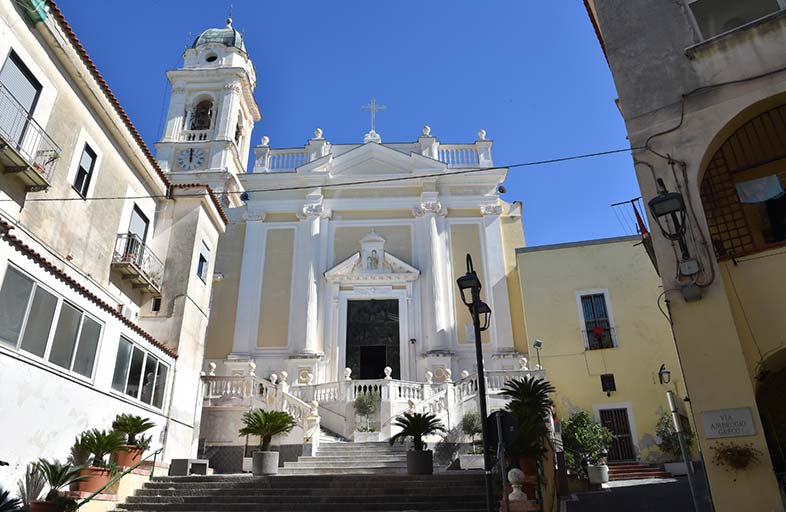
The Church of Saint Anne, patron saint of Bacoli, stands on the shores of Lake Miseno and is one of the area’s most important places of worship. Built in 1696 in the Baroque style and later reconstructed in the early twentieth century after a fire, it now features Neo-Renaissance and eclectic architectural forms. Inside, visitors can admire frescoes and sacred decorations depicting religious episodes, while its panoramic setting makes it a place of spirituality and great charm. This year, the parish celebrates its Jubilee marking the 330th anniversary of the church’s foundation.
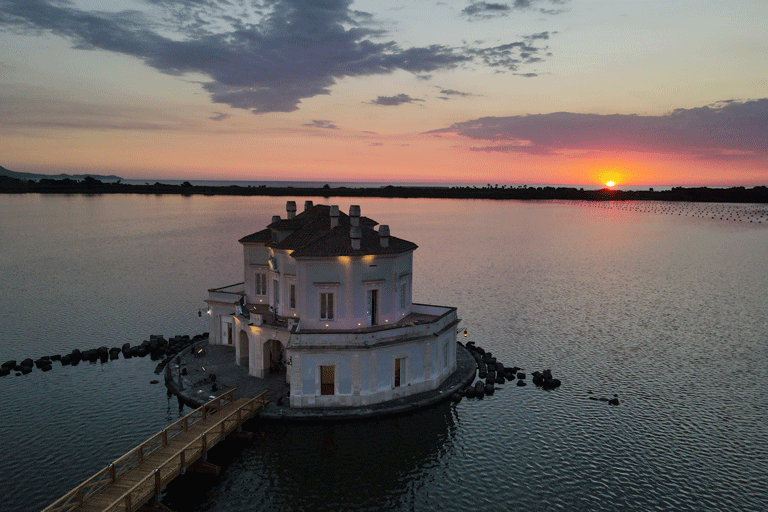
Casina Vanvitelliana
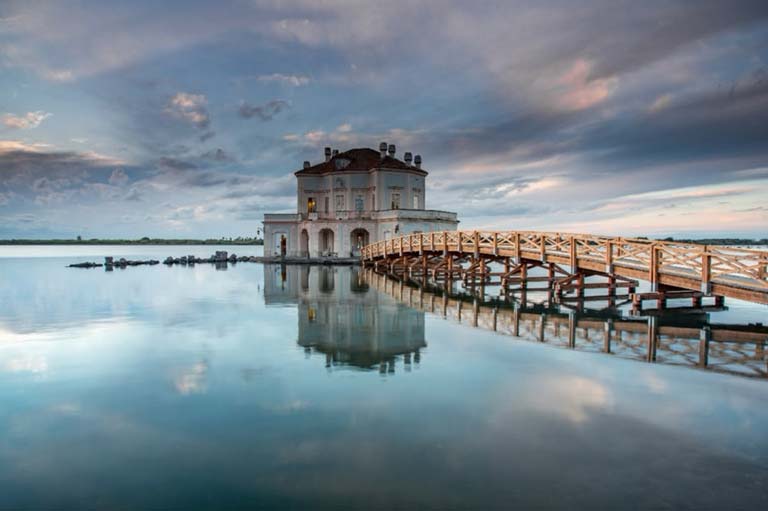
The Royal Bourbon Hunting Lodge of Fusaro, a late-Baroque masterpiece by Carlo Vanvitelli, was built in 1782 for King Ferdinand IV of Bourbon as a hunting and fishing residence. Situated on a small island in Lake Fusaro, it features a dodecagonal floor plan and two terraced levels. The main floor houses the Hall of Wonders, decorated with works by Hackert and royal apartments reserved for the sovereign’s family. It later became a residence for distinguished guests of the Kingdom of Naples.
Lake Miseno
Lake Miseno, also known as “Lago Maremorto” (“Dead Sea Lake”), is a saltwater lagoon of volcanic origin connected to the sea by two artificial channels. Linked to the myth of Misenus, the trumpeter of Aeneas, it was used during Roman times as a harbor and shipyard for the imperial fleet. Located between Bacoli and Monte di Procida, it is home to marine species such as mullet and sea bass and today represents a fascinating area of great historical and environmental significance.
Cape Miseno Lighthouse and the Birds’ Trail
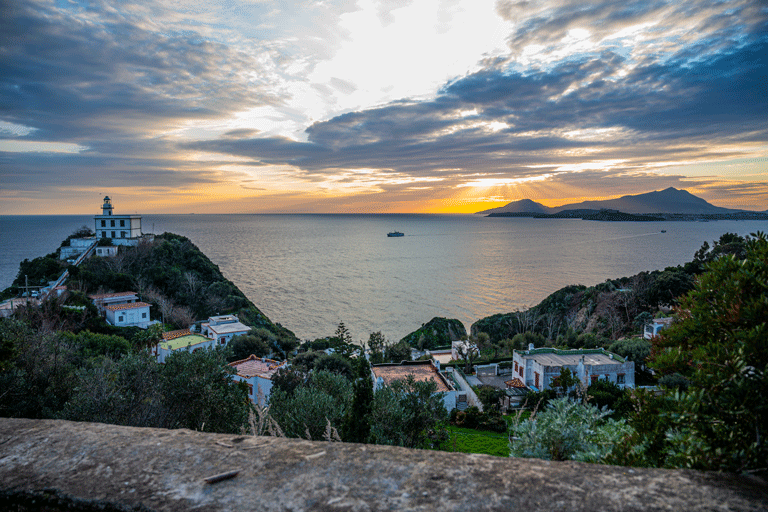
The Cape Miseno Lighthouse, active since the early nineteenth century, illuminates the Gulf of Pozzuoli and the Procida Channel, one of the busiest maritime routes in the region. Rebuilt in 1948 after the bombings of the Second World War, it is now a highly attractive panoramic landmark, open to visitors only on special occasions. From the promontory, visitors can enjoy spectacular views of Procida, Ischia, Capri, and Mount Vesuvius. Nearby is also the scenic “Birds’ Trail” hiking path.
Villa Ferretti
Villa Ferretti in Bacoli is a property confiscated from organized crime and returned to public use. Overlooking the sea, it includes a park with beach access and green spaces open to visitors. Today, it stands as a symbol of legality and social reuse, hosting public, cultural, and recreational activities. Its enhancement combines memory, environmental stewardship, and civic participation, making it an open and welcoming space for both residents and visitors to the Phlegraean Fields.
Lake Fusaro
Lake Fusaro, once identified with the mythical Acherusia Palus, is a volcanic lake located between Torregaveta and Cuma. Already in Roman times, it was exploited for mussel farming, and remains of patrician villas—now lost—have been discovered in its waters. During the nineteenth century, it was also renowned for lamprey breeding. At the center of the lake stands the Casina Vanvitelliana, the former Bourbon hunting lodge, now connected to the shore by a bridge and surrounded by a natural landscape of exceptional beauty and ecological value.
Bacoli
Overview
Bacoli is a town of 25,000 inhabitants in the Phlegraean Fields, overlooking the Gulf of Pozzuoli, a few kilometres from Naples. A volcanic area characterised by the phenomenon of bradyseism, it is a peninsula surrounded by the sea, whose hamlets include Cuma, one of the first Greek colonies on the Italian Mediterranean coast. Rich in archaeological sites, including the Submerged Park of Baia, it encompasses three ancient Roman cities: Cuma, Baia and Misenum, home to the Classis Praetoria Misenensis, the imperial fleet of Pliny the Elder. An ideal destination combining history, nature, beaches, food and wine, myths and legends.
Food
Capo Miseno mussels: Mussels farmed in the waters off Capo Miseno are one of Bacoli’s signature products. Fleshy and flavourful, they are enjoyed raw, au gratin or as the star ingredient in traditional pasta dishes.
Spaghetti with clams: A classic of Phlegraean cuisine, this dish combines pasta with fresh clams from the Gulf in a simple preparation that brings out the authentic aromas and flavours of the sea around Bacoli.
Fish soup: Rich and fragrant, it is prepared with various varieties of local fish and seafood. It is one of the dishes that best reflects Bacoli’s seafaring tradition.
The cicerchia: The cicerchia is an ancient legume from the Phlegraean peasant tradition. Rich in protein and flavour, it is used in soups and broths, representing a simple and authentic gastronomic heritage.
Peppered mussels: A simple yet flavourful dish, it features fresh mussels seasoned with plenty of black pepper. It is one of the most popular dishes during the summer months.
Ciambotta: Ciambotta is a traditional peasant dish prepared with seasonal vegetables, cooked slowly and seasoned with oil and herbs. Simple and wholesome, it captures the authentic flavours of the region.
Casatiello: Sweet casatiello is a traditional Easter cake from Campania, made with a soft, fragrant dough. Covered in a white icing decorated with coloured sprinkles, it is a symbol of celebration and conviviality.
Migliaccio: Migliaccio is a traditional dessert from Campania, made with semolina, ricotta, eggs and citrus flavourings. Soft and fragrant, it is particularly popular during the Carnival season.
The mandarin: The mandarin from the Campi Flegrei is a prized citrus fruit grown on the volcanic soils of the area. Fragrant and with an intense flavour, it is one of the region’s finest agricultural products.
Drinks
Bacoli’s winemaking tradition is linked to the wines of the Campi Flegrei, produced on volcanic soil that gives the grapes their unique characteristics. Among the finest wines are the Falanghina dei Campi Flegrei, a fresh, mineral-rich white wine, and the Piedirosso, a red wine with a balanced and fragrant flavour. Alongside the wines, artisanal liqueurs made from local citrus fruits are also highly regarded, such as the Campi Flegrei mandarin, a symbol of the region’s agricultural heritage.
Points of Interest
Baia Castle – Archaeological Museum of the Phlegraean Fields
Baia Castle, built by the Aragonese between 1490 and 1493 and expanded over the following centuries, is now home to the Archaeological Museum of the Phlegraean Fields. Inside, it preserves the remains of a prestigious Roman villa dating back to the 2nd century BC, possibly once owned by Julius Caesar. The museum route unfolds through courtyards, panoramic terraces, and ancient structures, offering breathtaking views of the Gulf of Naples and the remarkable volcanic landscape of the Phlegraean Fields.
The Underwater Archaeological Park of Baia
The Underwater Archaeological Park of Baia is a protected marine area that preserves extraordinary submerged remains of the ancient Roman city. Featuring mosaics, roads, columns, and villas—including the famous Villa del Protiro, which can also be explored while snorkeling—it offers a unique experience where history and nature meet. Many artifacts recovered from the seabed, such as statues and vases, are now displayed at the Archaeological Museum of Baia Castle.
The Baths of Baia
The area around the Gulf of Baia reveals an extraordinary archaeological stratification dating back to the Roman era. Over time, large thermal complexes and luxurious villas were built one upon another, taking advantage of the region’s volcanic and hydrothermal resources. The so-called “domes” of Mercury, Diana, and Venus were actually part of innovative thermal facilities and represent some of the earliest examples of concrete roofing. Originally, the site was occupied by spectacular multi-level villas overlooking the sea. Over the centuries, its function changed, becoming a thermal spa area and later falling into gradual abandonment during the Middle Ages, leaving behind a unique archaeological heritage.
Piscina Mirabilis
The Piscina Mirabilis in Bacoli is a monumental Roman cistern located near Miseno, the terminal point of the Augustan Aqueduct. Measuring 70 meters in length and supported by 48 pillars, it served as a water reserve for the imperial fleet. Designed like an “underground cathedral,” it could hold more than 12,000 cubic meters of water. Equipped with stepped entrances and maintenance systems, it remains one of the masterpieces of Roman hydraulic engineering and is still remarkably well preserved today.
Church of Saint Anne
The Church of Saint Anne, patron saint of Bacoli, stands on the shores of Lake Miseno and is one of the area’s most important places of worship. Built in 1696 in the Baroque style and later reconstructed in the early twentieth century after a fire, it now features Neo-Renaissance and eclectic architectural forms. Inside, visitors can admire frescoes and sacred decorations depicting religious episodes, while its panoramic setting makes it a place of spirituality and great charm. This year, the parish celebrates its Jubilee marking the 330th anniversary of the church’s foundation.
Casina Vanvitelliana
The Royal Bourbon Hunting Lodge of Fusaro, a late-Baroque masterpiece by Carlo Vanvitelli, was built in 1782 for King Ferdinand IV of Bourbon as a hunting and fishing residence. Situated on a small island in Lake Fusaro, it features a dodecagonal floor plan and two terraced levels. The main floor houses the Hall of Wonders, decorated with works by Hackert and royal apartments reserved for the sovereign’s family. It later became a residence for distinguished guests of the Kingdom of Naples.
Lake Miseno
Lake Miseno, also known as “Lago Maremorto” (“Dead Sea Lake”), is a saltwater lagoon of volcanic origin connected to the sea by two artificial channels. Linked to the myth of Misenus, the trumpeter of Aeneas, it was used during Roman times as a harbor and shipyard for the imperial fleet. Located between Bacoli and Monte di Procida, it is home to marine species such as mullet and sea bass and today represents a fascinating area of great historical and environmental significance.
Cape Miseno Lighthouse and the Birds’ Trail
The Cape Miseno Lighthouse, active since the early nineteenth century, illuminates the Gulf of Pozzuoli and the Procida Channel, one of the busiest maritime routes in the region. Rebuilt in 1948 after the bombings of the Second World War, it is now a highly attractive panoramic landmark, open to visitors only on special occasions. From the promontory, visitors can enjoy spectacular views of Procida, Ischia, Capri, and Mount Vesuvius. Nearby is also the scenic “Birds’ Trail” hiking path.
Villa Ferretti
Villa Ferretti in Bacoli is a property confiscated from organized crime and returned to public use. Overlooking the sea, it includes a park with beach access and green spaces open to visitors. Today, it stands as a symbol of legality and social reuse, hosting public, cultural, and recreational activities. Its enhancement combines memory, environmental stewardship, and civic participation, making it an open and welcoming space for both residents and visitors to the Phlegraean Fields.
Lake Fusaro
Lake Fusaro, once identified with the mythical Acherusia Palus, is a volcanic lake located between Torregaveta and Cuma. Already in Roman times, it was exploited for mussel farming, and remains of patrician villas—now lost—have been discovered in its waters. During the nineteenth century, it was also renowned for lamprey breeding. At the center of the lake stands the Casina Vanvitelliana, the former Bourbon hunting lodge, now connected to the shore by a bridge and surrounded by a natural landscape of exceptional beauty and ecological value.
Videos Stage 05

Giro Next Gen 2026 | Stage 5 | Highlights 🇬🇧
18 Jun 2026
Giro Next Gen 2026 | Stage 5 | Last KM 🇬🇧
18 Jun 2026Photos Stage 05
Giro Next Gen 2026 | Stage 5 | Best Of
18/06/2026