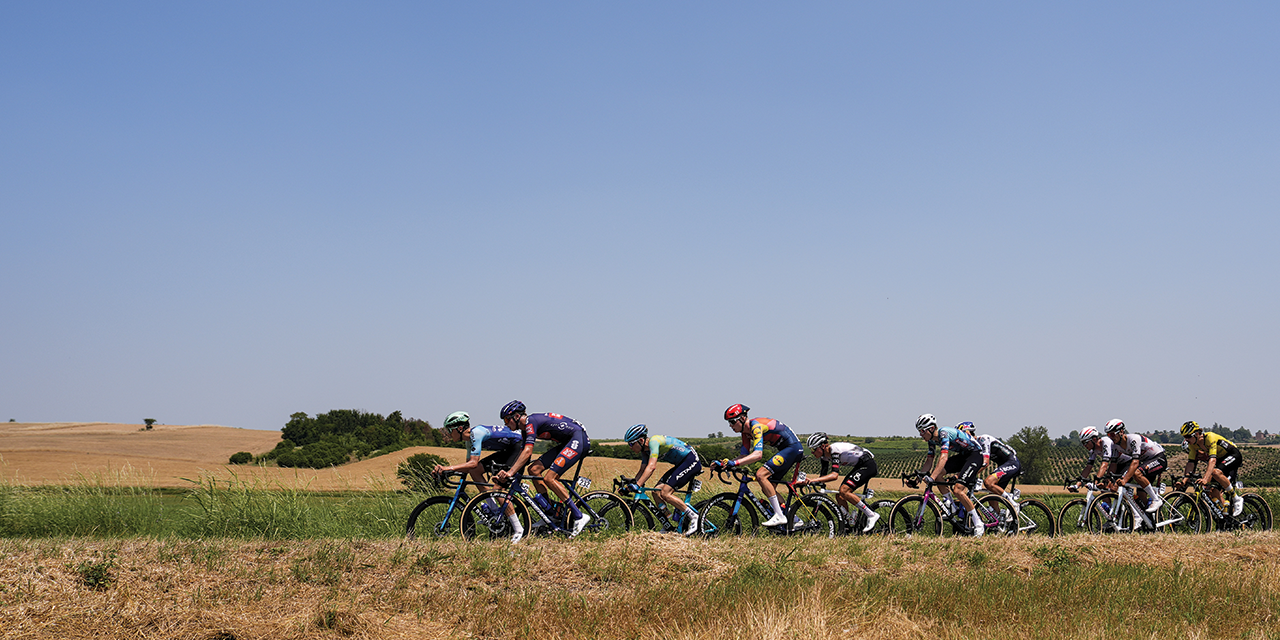
With the 2026 edition, the Giro Next Gen undergoes a slight change in identity. Its prestige remains intact, as does the dream of wearing the Maglia Rosa, but the setting changes—with all stages taking place in Southern Italy—and so does the overall design of the route. This year, all the decisive stages for the general classification are packed into the final three days, while the opening part of the race should favour sprinters and attackers.
Fast men to take centre stage in the opening days
Stage 1, from Reggio Calabria to Vibo Valentia, is not completely flat because of the relatively straightforward Mileto KOM in the finale, but a bunch sprint from a largely intact peloton appears the most likely outcome. Barring surprises, Stage 2, from Tropea to Crotone, should end in a similar fashion. From a profile standpoint, it is even less demanding.
Stage 3, crossing from Calabria into Basilicata, is more difficult to read. From Sibari to Villa d’Agri di Marsicovetere, the riders will tackle a constantly undulating route through the Lucanian hinterland. With no brutal gradients, the stage should not trouble the GC contenders, though it could encourage some outsiders to launch long-range moves. The key obstacle late on is the climb to Viggiano (8.8 km at 4.2%), not particularly steep but coming around a dozen kilometres from the finish.
The following day, the race leaves the stunning city of Matera and heads into Puglia, finishing in Corato (Molino Casillo). A roughly 40-kilometre circuit will be covered twice in the closing part of the stage. Riders will tackle the ascent to Castel del Monte (4.7 km at 4.7%) twice, the last passage coming about 20 kilometres from the line, but the more resilient sprinters should survive without major difficulties. Stage 5, however, is tailor-made for punchers and classics specialists. Starting and finishing in Bacoli, it features six laps of the Monte di Procida circuit, ridden in the opposite direction compared to the Giro d’Italia in 2022, won by Thomas De Gendt. Repeated passages over the Monte di Procida ramp (around 1.5 km at 6–7%), coupled with the sharp Mofete rise, which reaches gradients of 15%, are bound to thin out the field. GC riders will need to stay alert and avoid getting caught out.